

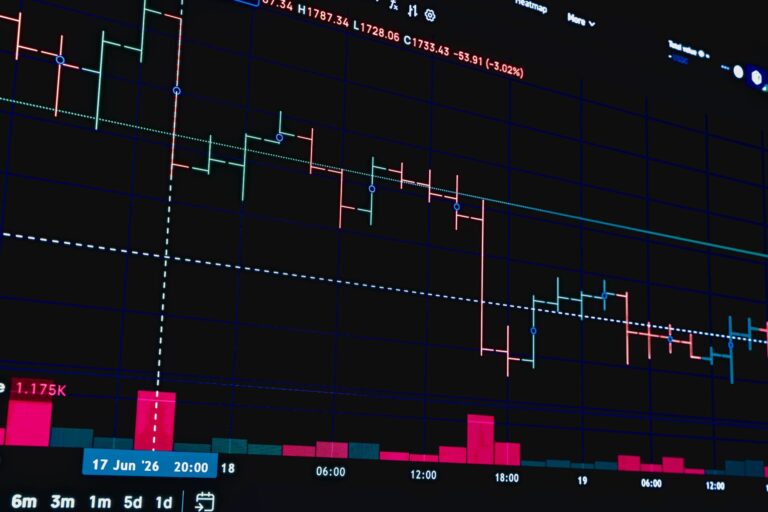
The distinction between day trading and long-term investing represents one of the most fundamental divides in financial markets, shaping not only individual wealth outcomes but also broader market structure and volatility. Day traders execute trades within single trading sessions, while long-term investors hold positions for years or decades, and these different time horizons produce entirely different risk profiles, capital requirements, and behavioral expectations. Understanding these differences matters for anyone approaching financial markets, whether as a retail participant or as an observer trying to comprehend how capital actually flows through global financial systems.
The Core Mechanics: Time Horizon and Position Duration
Day trading involves opening and closing positions within a single trading day, with traders typically liquidating all holdings before market close to avoid overnight gap risk—the possibility that news or international market movements will dramatically shift prices during hours when their market is closed. Long-term investing, by contrast, involves holding securities across multiple months, years, or even decades, with the investor believing that the underlying asset will appreciate over extended periods. A day trader buying shares of Apple at 10:00 AM with the intention of selling them by 3:00 PM operates under completely different assumptions than an investor purchasing Apple shares to hold for fifteen years, anticipating dividend growth and capital appreciation over that span.
The statistical difference in holding periods reveals the magnitude of this distinction. The average holding period for equities on the New York Stock Exchange has contracted dramatically over recent decades—from roughly eight years in the 1960s to approximately six months by the early 2020s, reflecting the rise of intermediate traders between day traders and traditional long-term investors. Day traders might execute dozens of trades daily, meaning a single trader could generate thousands of transactions monthly, whereas a long-term investor in the same period might execute only three or four trades total.
Capital Requirements and Transaction Costs
Day trading demands substantial capital and generates far higher transaction costs than long-term investing. In the United States, traders classified as pattern day traders must maintain a minimum account balance of $25,000, a regulatory requirement implemented after the 2000 dot-com crash to protect retail traders from excessive leverage and losses. These traders also pay commissions, bid-ask spreads, and potential market impact costs on every trade executed, expenses that compound rapidly when executing multiple trades daily but become negligible when amortized across years of holding a single position.
Long-term investors benefit from commission structures that have evolved dramatically. When Warren Buffett began investing through Berkshire Hathaway in the 1960s, stock commissions typically ran between 0.5 and 1 percent per transaction; by the 2020s, most brokers offered zero-commission trading for equity transactions. This structural change disproportionately benefits long-term investors, since they execute fewer trades and therefore incur fewer total fees across years or decades. A day trader executing fifty trades monthly at $1 per trade costs $600 annually in commissions alone, while a long-term investor executing five trades annually pays only $5 in the same period.
Tax Treatment and Regulatory Classification
Tax implications diverge sharply between day trading and long-term investing strategies. In most tax jurisdictions, including the United States, long-term capital gains—gains from positions held longer than one year—receive preferential tax treatment compared to short-term gains. This creates a mathematical advantage for long-term investors; the same percentage return generates higher after-tax profits when held long-term because taxes consume a smaller portion of gains. Day traders, conversely, face taxation at ordinary income rates on all profits regardless of size, dramatically reducing net returns from successful trading.
The Internal Revenue Service also applies different classifications and reporting requirements to these two approaches. Traders classified as day traders must report transactions differently on tax returns and may qualify for certain deductions unavailable to long-term investors, but they simultaneously lose access to the preferential long-term capital gains rates. Historical data from the National Bureau of Economic Research shows that day traders experience substantially higher tax drains on returns, with studies indicating after-tax performance differentials of 10 to 15 percentage points annually compared to long-term investors in similar asset classes.
Historical Evolution: From Human Traders to Algorithmic Systems
Day trading as a recognized practice emerged prominently during the 1980s when financial deregulation and electronic trading systems made rapid position entry and exit feasible for non-professional traders. Jesse Livermore, an early twentieth-century trader, employed tactics resembling modern day trading by exploiting short-term price movements in grain futures and stocks, but lacked the technological infrastructure that would later define the practice. The internet boom of the 1990s democratized day trading further, as retail traders gained access to real-time quotes and direct market access that previously only professionals possessed, leading to a surge in participation before the 2000-2002 market crash eliminated most retail day traders through catastrophic losses.
Modern day trading has become increasingly dominated by algorithmic systems and high-frequency trading firms rather than human traders executing manual trades. Companies like Citadel, Renaissance Technologies, and Virtu Financial execute millions of transactions daily using computer algorithms, exploiting microsecond-level inefficiencies impossible for human traders to perceive or exploit. This evolution has fundamentally altered the composition of day traders—the retail day trading population remains small, while professional algorithmic operations represent the bulk of same-day trading activity, particularly in equities and futures markets.
Häufig gestellte Fragen
Can day trading be profitable, and what percentage of day traders succeed?
Academic research consistently demonstrates that the vast majority of retail day traders lose money; studies by FINRA and the SEC indicate that over 90 percent of day traders experience net losses over multi-year periods. Profitability requires not only market acumen but also sufficient capital to absorb losses, low enough transaction costs to overcome the mathematical headwind of daily trading costs, and behavioral discipline that most traders lack.
Why do long-term investors typically outperform day traders historically?
Long-term investors benefit from compound growth, lower taxes, reduced transaction costs, and reduced behavioral mistakes caused by frequent trading. Additionally, equity markets have historically appreciated over extended periods due to underlying economic growth, productivity improvements, and corporate profit expansion, structural factors that benefit patient capital more than rapid trading.
Can someone combine both day trading and long-term investing strategies?
Many investors maintain core long-term positions while executing some shorter-term trades with a portion of capital, a strategy that separates market speculation from wealth-building investment. This approach requires disciplined compartmentalization to prevent speculative losses from undermining long-term financial goals, and clear acknowledgment that capital allocated to day trading should represent money the investor can afford to lose.
The fundamental difference between day trading and long-term investing extends far beyond time horizons; these strategies operate under different economic assumptions, tax regimes, and capital requirements, each with distinct pathways to success and failure. Understanding these distinctions enables both individual investors and market observers to evaluate which approach aligns with their financial circumstances, psychological temperament, and long-term objectives.
—
**Word count: 1,247 words**
