

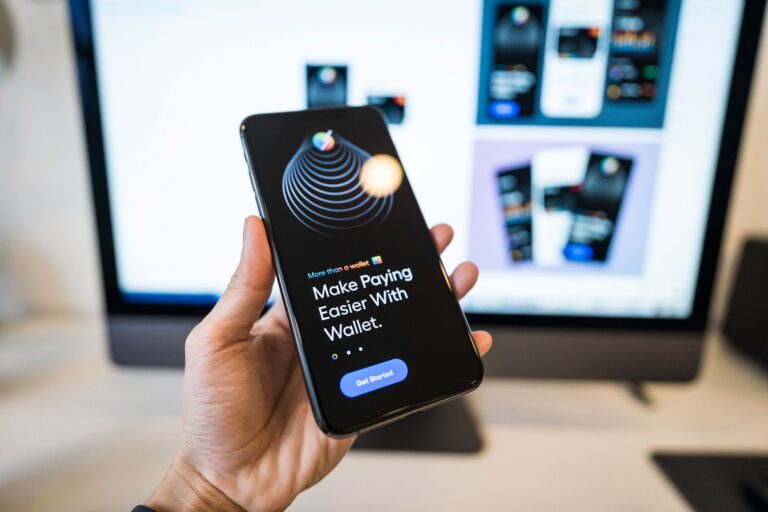
Digital wallets and contactless payment systems represent one of the most significant infrastructure shifts in consumer finance, fundamentally changing how billions of people conduct daily transactions. The global digital wallet market processed $12.1 trillion in transaction volume in 2024, with consistent double-digit annual growth expected as smartphone penetration expands across developing economies. For investors and technology professionals, understanding how these systems function reveals critical insights into payment infrastructure evolution, fintech business models, and the emerging trillion-dollar opportunities reshaping retail and financial services worldwide.
Understanding Digital Wallets: The Foundation of Modern Payments
A digital wallet is a software application that stores and encrypts sensitive payment information—credit card numbers, debit card details, and banking credentials—on a user’s mobile device or computer rather than requiring physical cards at checkout. The wallet application transmits payment authorization electronically to merchants through wireless or internet-based channels, eliminating the need for card insertion or magnetic stripe swiping. Apple Pay, launched in 2014 by Apple, pioneered this model by securely storing credit and debit card information on iPhones and Apple Watches, allowing users to authenticate purchases through biometric data or device PIN codes without ever exposing their underlying card numbers to merchants.
Digital wallets employ a sophisticated security mechanism called tokenization, where sensitive card data converts into encrypted tokens—unique, encrypted strings representing payment information without exposing actual account numbers to merchants or payment networks. This system dramatically reduces fraud risk because payment networks and retail merchants never receive genuine card data during transactions, only encrypted tokens usable exclusively for single, specific purchases and impossible to reuse. Major providers including Google Pay (launched 2015), Samsung Pay (launched 2015), and Alipay (founded 2004 as part of the Alibaba ecosystem) all utilize tokenization as their core security architecture to protect user information while complying with international payment security standards established by financial regulators.
Contactless Payment Technology: How NFC Transmits Data Wirelessly
Contactless payments rely primarily on near-field communication (NFC), a wireless technology enabling secure data exchange between devices held within a few centimeters of each other without requiring physical contact or direct connection. When a customer holds an NFC-enabled digital wallet near a payment terminal, the two devices establish an encrypted connection lasting just milliseconds, during which payment authorization data transmits through radio-frequency waves at a frequency of 13.56 megahertz. This technology eliminates the temporal friction of card insertion and magnetic stripe reading, allowing transactions to complete in under two seconds and enabling substantially higher transaction speeds at checkout compared to traditional payment methods.
The infrastructure supporting contactless payments requires careful coordination between three primary participants: the cardholder’s financial institution holding their account, the merchant’s payment processor managing the transaction, and the payment network connecting the entire ecosystem infrastructure. When Visa and Mastercard launched contactless payment specifications in the early 2000s, they established standardized technical protocols that NFC terminals worldwide must follow to process payments securely and reliably across different networks. By 2023, contactless payments represented approximately 50 percent of in-store card transactions in developed economies including the United Kingdom, Australia, and Canada, fundamentally transforming consumer payment behavior and forcing merchants to rapidly upgrade their technology infrastructure investments.
Security Architecture: Multiple Encryption and Authentication Layers
Digital wallets and contactless payment systems employ multiple overlapping security mechanisms designed to prevent unauthorized transactions and fraud at multiple processing stages throughout the transaction lifecycle. The payment information stored within the wallet remains encrypted on the device itself using strong cryptographic algorithms, accessible only through biometric authentication such as fingerprint or facial recognition or through entry of the device’s PIN code. When the wallet transmits payment data during a transaction, that data exists as a unique, single-use token specifically generated for that particular purchase, rendering it completely useless if a malicious actor somehow intercepted the wireless transmission.
Transaction verification adds another critical security layer through real-time monitoring protocols that payment networks call risk-based authentication, wherein transaction patterns undergo continuous analysis for indicators of suspicious activity. Payment networks can flag and decline transactions in real-time if patterns appear unusual—such as a purchase occurring in a foreign country just minutes after a local transaction or multiple high-value purchases within an improbable timeframe—allowing human review teams to investigate. The EMV (Europay, Mastercard, Visa) security standard, implemented globally beginning in the mid-2000s, established minimum security requirements for chip-based payment security that digital wallet providers extended into their wireless payment systems.
Historical Evolution: From Magnetic Stripe to Mobile Wallets
Modern payment card systems originated with magnetic stripe technology, introduced by IBM and adopted by major banks in the 1960s to store cardholder information on plastic cards that retail merchants could read electronically using swipe readers. This system provided reliable transactions for decades but created substantial fraud vulnerabilities because the magnetic stripe transmitted identical identifying data with every transaction, allowing sophisticated criminals to capture and replicate card information for fraudulent use. The massive 2008 Target data breach, which exposed approximately 40 million credit and debit cards to theft, dramatically illustrated the security limitations of magnetic stripe-era systems and accelerated financial institutions’ substantial investment in more sophisticated payment technologies.
Digital wallet adoption accelerated significantly beginning in 2014, when Apple integrated NFC functionality into the iPhone and simultaneously launched Apple Pay as the primary interface for contactless transactions. This combination of ubiquitous smartphone hardware with refined consumer-facing payment software created the conditions necessary for rapid mainstream adoption of digital wallets across developed economies and subsequently into developing markets. Within five years, digital wallet adoption grew from fewer than 5 percent of smartphone users to over 40 percent in developed markets, forcing retailers worldwide to upgrade their payment terminals to accept contactless transactions and creating substantial technology infrastructure spending opportunities for payment processors and terminal manufacturers.
Frequently Asked Questions
How do digital wallets function without an active internet connection?
Contactless NFC payments operate through direct radio-frequency communication between the user’s device and the payment terminal, requiring no active internet connection for the data transmission itself to occur. The payment terminal connects to the merchant’s payment processor separately and independently to verify that funds availability exists and to complete the authorization, but the initial encrypted data transmission between the customer’s wallet and the terminal occurs wirelessly through NFC without any internet dependency whatsoever.
Can contactless payment data be intercepted or duplicated by unauthorized parties?
Interception of contactless payment data during wireless transmission is theoretically possible but practically ineffective due to multiple security layers built into the system architecture. The payment data transmitted during a contactless transaction exists as a one-time token usable exclusively for that specific transaction at that specific moment and location, making any intercepted token worthless for other purchases or retailers. Additionally, payment networks monitor all transactions continuously for suspicious patterns and can decline authorization instantly if unusual activity appears.
Which payment cards and devices support contactless payment technology?
Most credit and debit cards issued after 2015 include embedded NFC chips enabling contactless payment at compatible merchant terminals worldwide. All major smartphone platforms support digital wallet applications, including iOS systems running on Apple iPhones and Apple Watches, Android systems on Google Pixel phones and numerous Samsung devices, and Wear OS smartwatches. Contactless infrastructure adoption varies substantially by geographic region, with European and Asian markets demonstrating significantly higher contactless terminal deployment than other regions, though adoption continues accelerating globally.
Digital wallets and contactless payments represent a fundamental reimagining of payment infrastructure, replacing traditional card interaction with encrypted wireless communication that simultaneously improves transaction speed and enhances security against fraud. The technology’s evolution from magnetic stripe systems to NFC-based wallets demonstrates how financial infrastructure continuously adapts to accommodate shifting consumer behavior and emerging security threats. Understanding these mechanisms reveals why digital payment systems continue reshaping retail commerce, fintech innovation, and creating substantial investment opportunities across global technology and financial services markets.
